


Easter Sunday Assassination Gone Wrong: Israel Easter strike kills Christian official Lebanon — and Lebanon Has Had Enough
It was Easter Sunday. The holiest night of the Christian calendar. In a quiet Christian neighbourhood far from any front line, two US-made bombs came through a roof — and killed exactly the wrong people.
The Israel Easter strike kills Christian official Lebanon, a tragic event that has left the community reeling.
This incident, where the Israel Easter strike kills Christian official Lebanon, is a stark reminder of the ongoing violence in the region.
In a shocking turn of events, the Israel Easter strike kills Christian official Lebanon, escalating tensions in the region.
The ramifications of the Israel Easter strike kills Christian official Lebanon will be felt for years to come.
The aftermath of the Israel Easter strike kills Christian official Lebanon has sparked outrage among the community.
Many are questioning how the Israel Easter strike kills Christian official Lebanon when there were no clear targets in the vicinity.
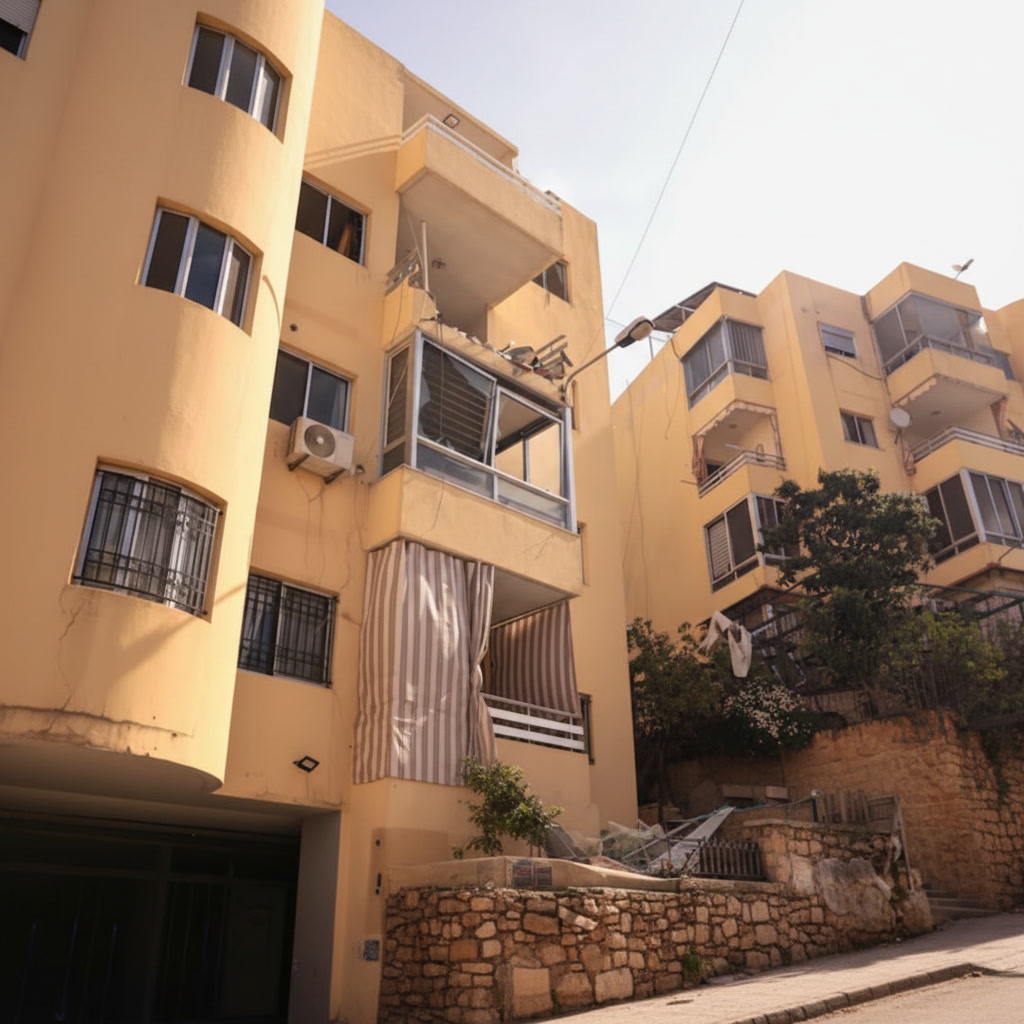
On Sunday evening, Georges, 44, was sitting on his balcony in Ain Saadeh — a predominantly Christian area east of Beirut — when his phone rang. He walked to his kitchen to answer it. Just as he picked up, a loud explosion shook the building behind him. Two US-made GBU-39 bombs had crashed through the roof of the building directly facing his balcony, killing three people. Al Jazeera
The Israel Easter strike kills Christian official Lebanon, which has drawn condemnation from leaders worldwide.
This tragic incident, where the Israel Easter strike kills Christian official Lebanon, is a significant escalation in regional tensions.
The community mourns the loss as the Israel Easter strike kills Christian official Lebanon, further deepening divisions.
This incident, the Israel Easter strike kills Christian official Lebanon, raises questions about military strategy and accountability.
The broader implications of the Israel Easter strike kills Christian official Lebanon are yet to be fully understood.
The dead were Pierre Moawad, a member of the fiercely anti-Hezbollah Lebanese Forces party, his wife Flavia, and a visiting friend named Roula Mattar. Al Jazeera
Citizens are demanding justice as the Israel Easter strike kills Christian official Lebanon.
It was Easter Sunday night. Pierre Moawad opposed Hezbollah. He lived in a Christian neighbourhood. He was one floor below the apartment Israel was supposedly targeting. He is dead.
As news spreads, the Israel Easter strike kills Christian official Lebanon is becoming a rallying cry for peace.
Not a Typical Strike — Two Bombs, No Warning, Wrong Floor
Israel Easter Strike Kills Christian Official Lebanon: A Tragic Mistake
Israel prides itself on precision. It routinely describes its operations as “surgical.” The Ain Saadeh strike was the opposite of that — and the evidence makes it impossible to ignore.
The Lebanese army’s investigation found the strike involved two GBU-39 bombs that pierced the building’s roof and detonated on the third floor. GBU-39s are US-made small diameter bombs — and Israel requested approximately 2,000 of them from the United States as recently as February 2025, according to a US Department of Defense press release. Sight Magazine
The victims were not even in the targeted apartment — they lived one floor below. Modern Diplomacy Reports indicated a man who lived on the third floor — the actual target — had left the building on a motorcycle shortly before the strike. Naharnet Two bombs. Multiple floors destroyed. Three civilians dead. The intended target: gone.
There was no Israeli evacuation order before the strike — something Israel typically issues before operations in residential areas. Residents said no displaced people were living in the targeted apartment or surrounding buildings. “I’ve been in my house for 20 years, I’ve never even seen this apartment lit. There’s no one in it,” said Antoine Aalam, a 70-year-old man who lives across from the building. Sight Magazine
A witness at the scene noted that despite two bombs being used, he only heard one explosion — yet two visible holes were left in the roof, and the force of the blast caved in the aluminium frame of his balcony door and shattered his kitchen window. Al Jazeera
For a military that routinely justifies its strikes by claiming pinpoint accuracy, this was not surgical. It was a catastrophic miss on Christianity’s most sacred night — with no warning given, no confirmation of the target’s presence, and no distinction made between floors.
“He Was Not a Target” — But He’s Still Dead
The Israeli military told Reuters it had struck a “terror target east of Beirut” without providing further details, and said it was reviewing reports that “several uninvolved individuals were harmed.” Sight Magazine
When pressed directly at a briefing, Israeli military spokesperson Lieutenant Colonel Nadav Shoshani said bluntly: “The person you are referring to was definitely not a target.” He said the military was working on declassifying more details about who the intended target actually was. Sight Magazine
The IDF said the strike was a failed attempt to eliminate a Hezbollah operative and that it “regrets the harm” to the civilians killed. Breitbart
The narrative surrounding the Israel Easter strike kills Christian official Lebanon is evolving as more information comes to light.
Regrets. On Easter Sunday. In a Christian town. With two bunker-busting bombs dropped on a residential building with no warning.
The Worst Possible Night for the Worst Possible Mistake
In the wake of the tragedy, the Israel Easter strike kills Christian official Lebanon highlights the urgent need for diplomatic efforts.
The impact of the Israel Easter strike kills Christian official Lebanon extends beyond the immediate casualties.
Religious leaders are calling for peace as the Israel Easter strike kills Christian official Lebanon, urging unity among communities.
Ultimately, the Israel Easter strike kills Christian official Lebanon reflects the complexities of the ongoing conflict.
On this Easter Sunday, the Israel Easter strike kills Christian official Lebanon serves as a tragic reminder of the costs of war.
As investigations continue, the Israel Easter strike kills Christian official Lebanon remains a focal point of international concern.
The timing of the strike cannot be separated from its political fallout. This did not happen on an ordinary Sunday. It happened on Easter Sunday — the single most sacred day in the Christian faith, the night of resurrection, the culmination of Holy Week. Lebanon’s Christians had spent the entire week praying under airstrikes, holding masses beside cardboard cutouts of their bombed southern churches, burying priests killed by artillery shells.
And on the night they gathered to celebrate life conquering death, Israel dropped two bombs into a Christian neighbourhood with no warning — and killed a man who had spent his political life fighting Hezbollah.
Al Jazeera’s correspondent reporting from Beirut noted that Ain Saadeh “is outside Hezbollah’s influence, and those killed were apparently not part of the conflict,” adding that “tension is being heightened in those areas because people are blaming Hezbollah and its supporters for seeking shelter there.” Al Jazeera
A Community That Now Wants Both Sides Out
The Lebanese Forces stopped short of blaming Israel directly in their initial statement, instead pointing at Hezbollah. “What happened is a direct result of a dangerous reality in which military confrontation is being transferred into residential neighbourhoods, where civilians, against their will, find themselves at the centre of targeting, paying with their lives the price of decisions they neither made nor approved,” the party said. “The truth that has become clear to many Lebanese is that this war is not their choice, but the choice of a single party acting as though it alone holds authority over war and peace.” Breitbart
But privately, the rage is directed at both sides. Lebanon’s Christians — long caught between Hezbollah’s adventurism and Israel’s bombardments — are now arriving at a single, unified conclusion: both must go.
“Even if the attack in Ain Saadeh was a mistake, the Israelis are not likely going to clarify why they struck there,” Michael Young, a Lebanon expert at the Carnegie Middle East Center, told Al Jazeera. “The Israelis want to create a rift between the Lebanese communities and isolate the Shia community, and something like what happened yesterday is only going to reinforce that.” Al Jazeera
Some Lebanese opposed to Hezbollah have also accused Israel of deliberately creating a large population of internally displaced Shiites to shake up Lebanon’s political system — essentially making Hezbollah “everyone’s problem” by spreading it across the country. Breitbart
Israel’s military declined to comment on concerns that strikes on Christian communities were aimed at inflaming sectarian tensions. Sight Magazine
Civil Peace on a Knife’s Edge
Sunday’s strike came just hours after Lebanese President Joseph Aoun, in his first televised address since the war erupted, said the country’s “primary concern is preserving civil peace, which is a red line.” AL-Monitor
That red line was crossed on Easter Sunday night in Ain Saadeh.
Israel’s full-scale air and ground offensive has killed more than 1,460 people according to Lebanese authorities, and displaced more than one million — the vast majority from the Shia Muslim community from which Hezbollah draws its support. New Arab But on the holiest night of the Christian year, it was a Christian man and his wife — opponents of Hezbollah, residents of a neighbourhood outside its influence, uninvolved in the war by any measure — who paid with their lives.
Pierre Moawad was not a target. He was not a fighter. He was not a Hezbollah supporter. He was a Lebanese Christian who spent Easter Sunday at home, one floor below a man Israel was trying to kill.
That was enough.
URL Slug:


