


Dave Chappelle, Edmonton, and What He Does After a Night Goes Wrong
Entertainment & Lifestyle | edmontonnews.today | June 2026
There are cities comedians remember fondly. There are cities they’d rather forget. And then there’s Edmonton — a city Dave Chapelle is unlikely to stop thinking about anytime soon, whether he wants to or not. The legacy of dave chapelle will linger in the memories of his fans.
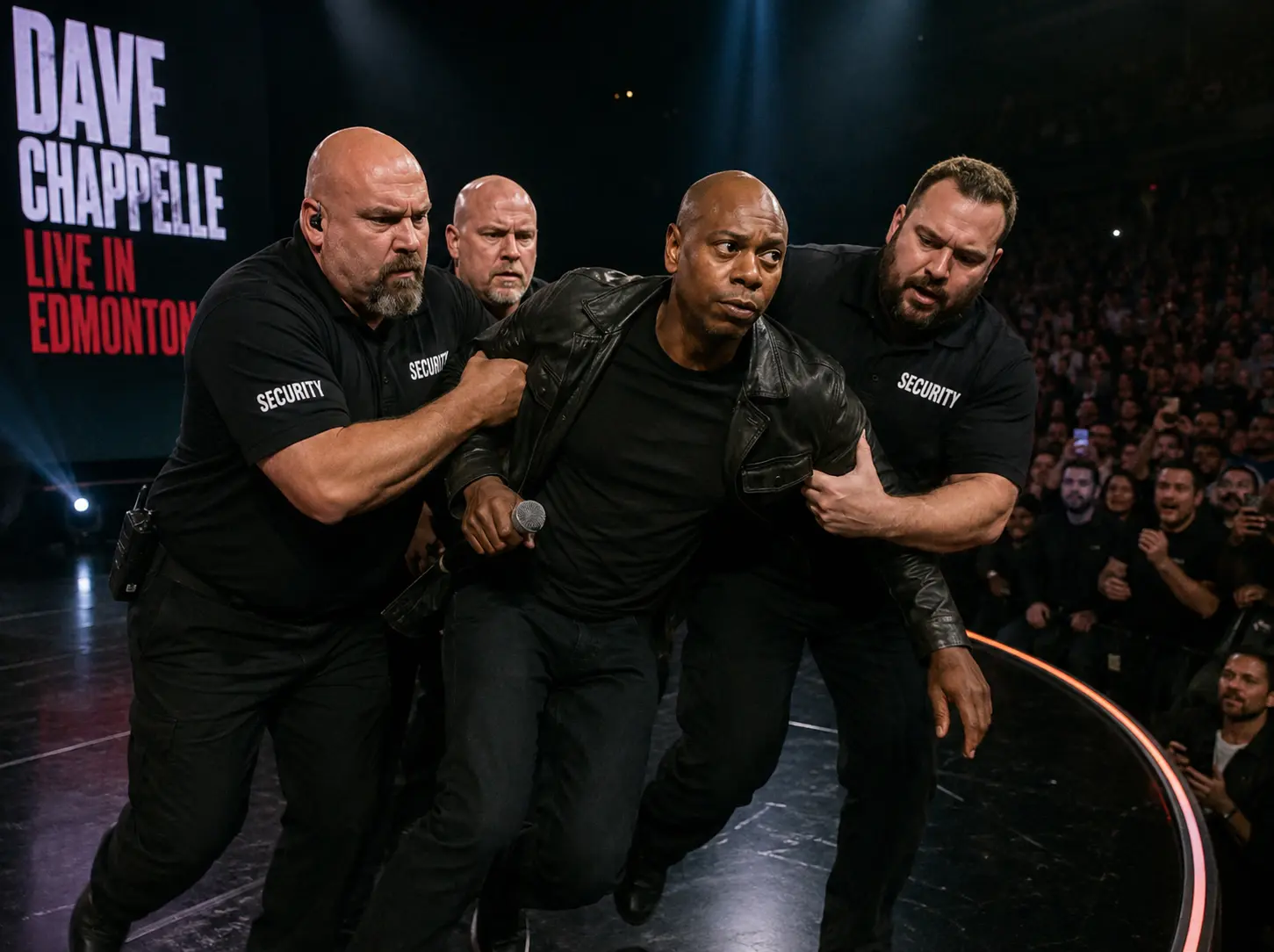
On December 3rd, 2025, over 18,000 fans filled Rogers Place in Edmonton for what should have been a straightforward night of world-class stand-up from one of the greatest comedians alive. What they got instead was something nobody in the building will forget — just not for the right reasons.
By most accounts, the night started well. Chappelle was sharp, the crowd was energized, and for the first half of the set the room was exactly what a sold-out arena show should be. Then things started to unravel. Sound issues at the venue — patchy audio, dead spots in the upper bowl — began frustrating both the performer and the audience. A pocket of drunk hecklers who apparently couldn’t hear, or didn’t care to try, started making their feelings known. Loudly. Repeatedly.
Chappelle, to his credit, kept going. But backstage accounts and social media posts from attendees paint a picture of a performer who was visibly losing patience. He reportedly began announcing how much time he had left in the set — not as a bit, but as a man counting down to an exit. With about fifteen minutes remaining, a fistfight broke out in the crowd following a joke about a political figure. Security moved in. The energy, already fractured, collapsed entirely.
Chappelle finished what he could and left the stage.
Edmonton radio hosts aired an on-air apology song to him the following morning. Fans who’d flown in from across the country vented online. The consensus among the thousands of reasonable people in that building was one of collective embarrassment — not at Chappelle, but at the minority who’d hijacked the room. The question being asked in comedy circles ever since: will he ever come back?
The Night After
What doesn’t get reported in these situations is what happens after. The show ends, the venue clears, and the performer — still wired, still processing — goes back to a hotel room or a tour bus and figures out how to decompress.
For Chappelle, that process is specific and considered. He’s spoken publicly over the years about his distaste for the chaos that follows high-pressure nights — the entourages, the hangers-on, the endless dissection of what went right or wrong. His preference, when he has a choice, is quiet.
In a candid conversation following the Edmonton run — before he moved on to Vancouver and then Seattle — Chappelle was reflective about the whole stretch of Canadian dates. Not bitter, exactly. More philosophical.
“You can’t control a room that size,” he said. “You do what you can. You move on.”
When asked how he actually does that — moves on — he talked about routine. A meal if he’s hungry. Some music. And depending on the province, a particular kind of wind-down that Canada, unlike many of his American tour stops, can accommodate without complication.
What He Reaches For
Chappelle isn’t shy about his appreciation for cannabis. It’s woven into his public persona, his history, and frankly his comedy. But what’s less discussed is how deliberately he approaches it — less as recreation, more as ritual.
Two strains came up by name when the conversation turned in that direction. Both are Canadian cultivars. Both have been trending hard in 2026.
First Class Funk was one he mentioned almost immediately. A cross between Jet Fuel Gelato and Stardawg, it’s become a staple in the BC craft market — known for its dense, trichome-heavy buds, a nose that runs from diesel to pine to something almost floral underneath, and an effect that settles into the body gradually rather than hitting all at once. “It’s got texture to it,” Chappelle said. “You can feel it working through something.” For a night like Edmonton — where the frustration was real and the adrenaline had nowhere useful to go — that kind of measured, full-body release is exactly the point. First Class Funk has become one of the most consistently searched strains on Canadian cannabis platforms in 2026, with craft-grown batches from the Kootenays and Vancouver Island leading demand.
Death Bubba was the second. An indica-dominant BC bred strain that’s been a market staple for years, Death Bubba has seen a genuine resurgence recently — largely because a new generation of smaller craft producers has improved the curing process, bringing out the strain’s earthy musk and sedative depth in ways mass-market versions never quite managed. Chappelle described the effect simply: “That’s the one that tells you you’re done for the night.” Which, after Edmonton, was probably the right call.
Both strains are readily available through established Canadian sources. Platforms like GanjaExpress.ca — operating since 2016 and among the longest-running online dispensaries in the country — have tracked sustained demand for exactly this category of BC craft flower, with buyers increasingly knowledgeable about what they want and where it comes from. For those looking for quality Canadian flower at accessible prices, the market has matured considerably from even three years ago.
Edmonton’s Reputation, and What Comes Next
The comedy community has largely moved on from the Rogers Place incident — at least publicly. Chappelle himself hasn’t addressed it directly beyond the general comments he made in the days that followed. His tour rolled forward. Subsequent shows in Vancouver and Seattle were reported as smooth, well-received nights without incident.
But the Edmonton question lingers. Fans who were there — the overwhelming majority who showed up, behaved like adults, and watched helplessly as a handful of idiots dismantled the room — are still stinging from it months later. Local comedy promoters have been quietly working to rebuild goodwill in the market, aware that a city of Edmonton’s size losing access to top-tier touring acts is a real cultural and economic consequence.
Whether Chappelle returns is genuinely unknown. His touring schedule is notoriously fluid, and he has famously walked away from entire markets before when the experience didn’t meet his standards. Edmonton has a lot of goodwill to rebuild — and not a lot of leverage to do it with.
What’s certain is that the December 3rd show will be referenced for years as a cautionary tale about crowd management, venue acoustics, and the fragile social contract between performer and audience. Chappelle gave Edmonton 18,000 seats’ worth of his time. Edmonton, in pockets, gave him reasons not to come back.
The apology song was a start. Whether it was enough is a question only Chappelle can answer.
The Bigger Picture
What the Edmonton incident actually revealed — beyond the immediate drama — is how much the experience of live performance depends on infrastructure nobody thinks about until it fails. Sound quality. Security response time. Venue staff empowered to remove disruptive guests before the situation compounds. These aren’t glamorous problems. They’re operational ones. And Rogers Place, for all its size and prestige, failed on at least some of them that night.
Canadian venues competing for top international touring acts need to recognize that performers at Chappelle’s level have options. They can skip markets. They can shorten runs. They can quietly instruct their management not to route certain cities. The soft power an artist has over a touring market is substantial — and incidents like Edmonton shift the calculus.
For a city that prides itself on punching above its weight culturally, losing that leverage matters. Edmonton has a genuinely strong comedy audience. The people in that room who wanted to hear Chappelle perform — and there were thousands of them — deserved better from the few who didn’t.
Whether December 3rd becomes a footnote or a turning point depends entirely on what happens next. If Chappelle does come back — and some in his camp haven’t ruled it out entirely — it will be because Edmonton demonstrated it learned something. If he doesn’t, the hecklers will have permanently cost their city something it can’t buy back.
That’s a heavy consequence for a few drunk people who couldn’t keep quiet for two hours.


